Peter Johnstone
SERVICE: New Zealand Army
RANK: Private / Driver
SERVED: 1942-1945
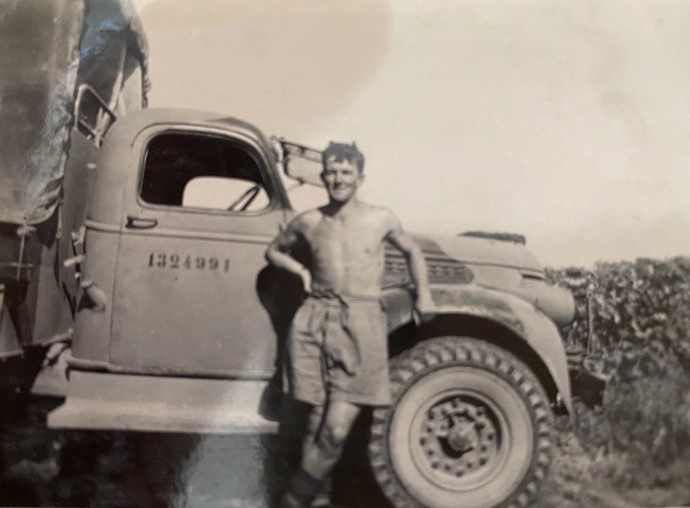
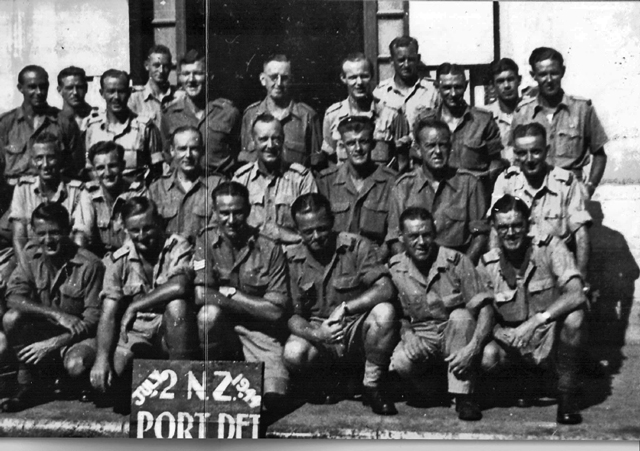
Peter was born in Mosgiel and spent most of his life there. He was very competitive by nature and loved his rugby. Once he left school at 12 years of age, Peter worked at the Mosgiel Woollen Mills. Originally Peter was not allowed to go to World War II as he was deemed an essential worker. He wanted to serve for his country so in order to get approval, Peter drove to Christchurch to successfully find someone to take over his job at the Woollen Mills. Peter was appointed to the Canterbury Yeomanry Cavalry (the C.Y.C.) and after training at Burnham Military Camp he sailed for Egypt in 1942, just before his 21st birthday. He had to obtain his parents consent to leave New Zealand prior to his birthday. His army number was 448735. Peter was a driver in the Port Detachment which trucked supplies from Italian ports up to the front line.
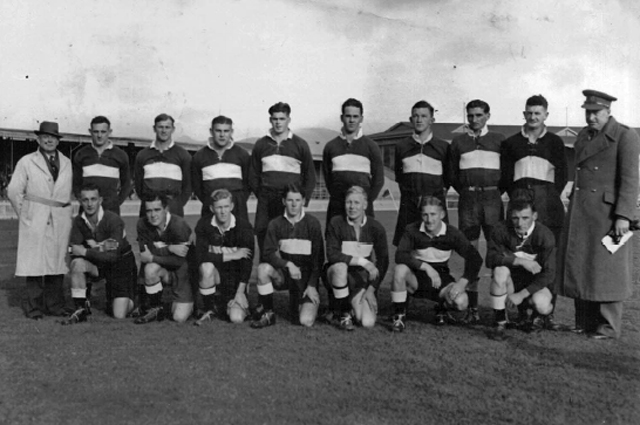
Post war he started a building apprenticeship and focused on his rugby. After the war, Peter played for the NZ army rugby team, which sparked his rugby career. Peter said that the war saved him as it meant he could get out of Woollen Mills business and playing for the NZ army recognised him as a rugby player. Peter represented Ashburton County while serving in the army, and later for the Otago provincial team in 1946. He was a rugged No 8 and blindside flanker, and was a key member of the Otago team during its great Ranfurly Shield era from 1947-51. Selected for the All Black tour of South Africa in 1949 he played two of the tests and was the sole New Zealand forward to score a try in that series. In 1950 he was a member of the Otago side which defeated the British Lions and played in all four tests against the Lions being the captain in the fourth. He also captained the unbeaten 1951 All Blacks in Australia when the Bledisloe Cup was returned to New Zealand. He retired at the conclusion of this tour. He played 26 matches for the All Blacks, 10 as the captain.
At club level Peter played for the Taieri rugby club in Mosgiel. Peter was one of four internationals, and the only All Black captain, to have come from the Taieri Rugby Football Club. As a loyal Taieri man, Peter continued to support the club after he retired and coached the first Taieri team to win the Dunedin premier competition in 1955. When Peter finished his career as an All Black he started building bridges. He used his building expertise to contribute to help build the new Taieri rugby clubrooms that are there today. He, along with several others used their resources to level and create the grounds. Peter played an instrumental part in the rugby grounds and it was named Peter Johnstone Park in his honour. The club has the best club grounds in Otago. Peter was an Otago rugby selector from 1959–61 and a President and Life Member of the ORFU and Taieri Rugby Football Club.
Within the Mosgiel RSA Peter played bowls. Peter was an influential figure within the Mosgiel RSA bowling community. Peter was the mastermind behind setting up a bowls tournament for ex All Blacks and rugby players. The tournament is often referred to as the “Rugby Tournament”, which is held annually in Mount Maunganui. When Peter suddenly passed away in 1997, his brother Jim donated a trophy in memory of his brother, called the Peter Johnstone Memorial Trophy. The bowls tournament was renamed the Peter Johnstone Rugby Bowls Tournament. Peter’s family, like so many locally, have had a long and proud association with the Mosgiel RSA. His father, William (Bill) served with the Otago Mounted Rifles in World War I in the Gallipoli campaign and the Western Front. His brothers Bill and George also served in the armed forces in World War II, sister Rachel in the WAC, with youngest brother Jim in the territorials awaiting the age of 18 to serve.